Refresh rate vs scan rate, explained
Why both matter on camera and in person.
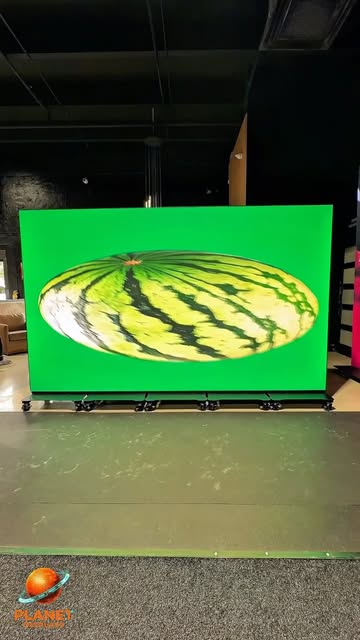 Photo: @planetdisplays
Refresh rate
Refresh rate is how many times per second the LED driver redraws each pixel, expressed in hertz. Values of 3,840 Hz and above keep the image stable on phone cameras and broadcast cameras; 7,680 Hz is preferred for studios and virtual production.
Scan rate
Scan rate describes how many rows of LEDs share one driver channel. A 1/8 scan lights one of every eight rows at a time; a 1/32 scan, one of every thirty-two. Lower scan ratios (static or 1/8) give higher brightness, typical of outdoor products; higher ratios allow fine-pitch indoor modules.
Frame rate is different
Frame rate (30, 60 or 120 fps) is the rate of the incoming video. The refresh rate must be much higher than the frame rate so each frame is drawn many times without visible flicker.
Why both matter on camera
Cameras sample the screen with their own shutter. A low refresh rate or an unfavourable scan produces black bands or rolling lines in the recording, even if the screen looks perfect to the eye.
What to specify
For events and worship with streaming, ask for at least 3,840 Hz and a high-grey-scale driver. For studios, 7,680 Hz. Every product page lists the refresh rate and scan of each model in its specifications matrix.
Next steps
Use the instant pricing tool for an example budget or ask Taylor for a formal proposal for your space.
Related products
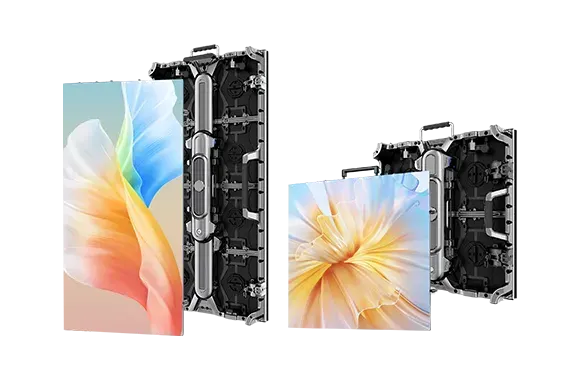 Product image · reference
RS Series
500 × 500 / 500 × 1000 mm, P1.9–P3.9 indoor and outdoor.
Configure →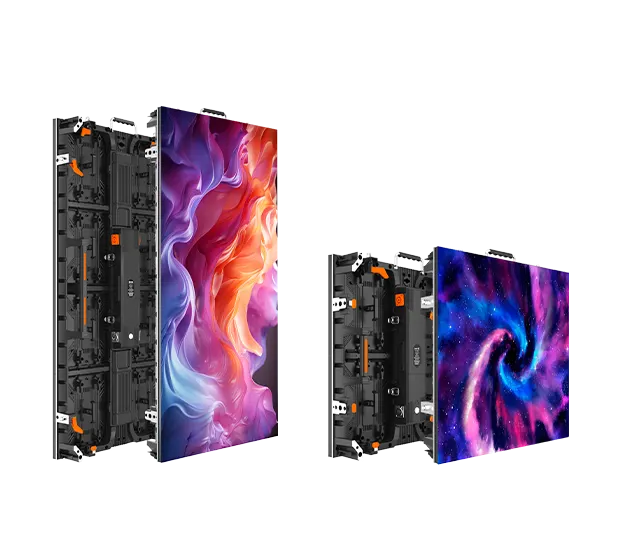 Product image · reference
XS Series
Power-sharing rental panels P1.9–P3.9, indoor and outdoor.
Configure → Product image · reference
DM COB Series
COB micro-pitch P0.7–P1.56 with power and data backup.
Configure →