Indoor vs outdoor LED: what really changes
Brightness, sealing, thermal design and pitch for each environment.
 Photo: @planetdisplays
Brightness
Indoor walls typically run at 500–1,200 nits and are dimmed further in dark rooms. Outdoor screens need 5,000 nits or more to stay readable in direct sunlight, with automatic light sensors that lower brightness at night.
Sealing and IP rating
The IP rating shows protection against dust and water. Indoor cabinets are commonly IP30–IP43. Outdoor cabinets are IP65 at the front and the rear, which means they are dust-tight and protected against water jets.
Thermal design and power
Outdoor cabinets are designed to dissipate heat without fans or with sealed airflow, and to operate from about −4 °F to 122 °F. They draw more power at full brightness, so electrical capacity must be checked early.
Pitch and viewing distance
Outdoor audiences are usually far away, so 3.91–10 mm is common; fine-pitch outdoor COB now reaches 1.5–1.9 mm for terraces and storefronts. Indoor spaces use 0.7–3.91 mm depending on the closest seat.
Semi-outdoor cases
Screens behind a shop window or under a covered patio face strong daylight but little rain. A high-brightness indoor model or a window-facing poster is often enough, at a lower cost than a full outdoor cabinet.
Next steps
Use the instant pricing tool for an example budget or ask Taylor for a formal proposal for your space.
Related products
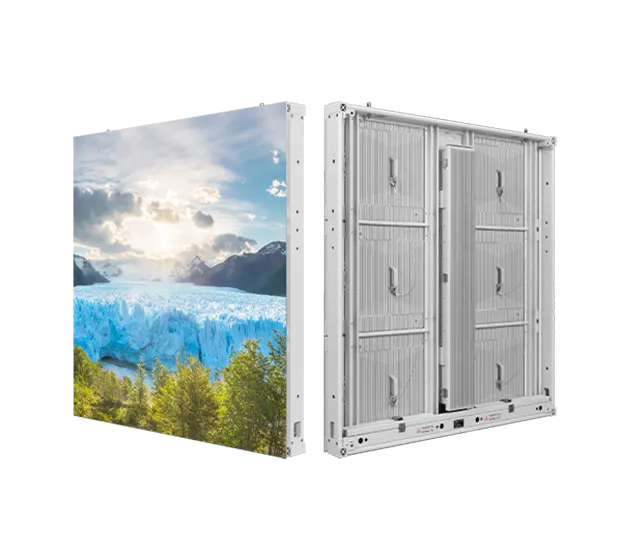 Product image · reference
APRO Series
Common-cathode 960 × 960 mm, P4.4–P10, IP66.
Configure →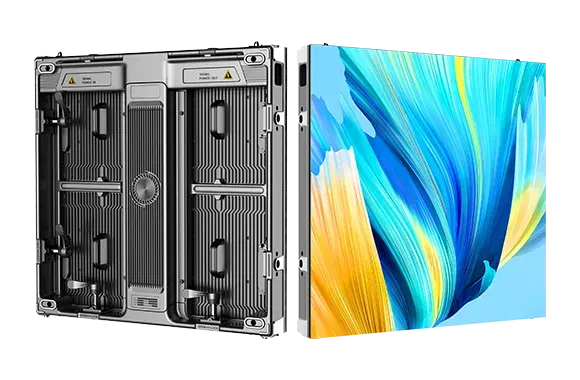 Product image · reference
APRO-ULT COB Series
UV- and corrosion-resistant COB P1.5 / P1.9, IP66.
Configure →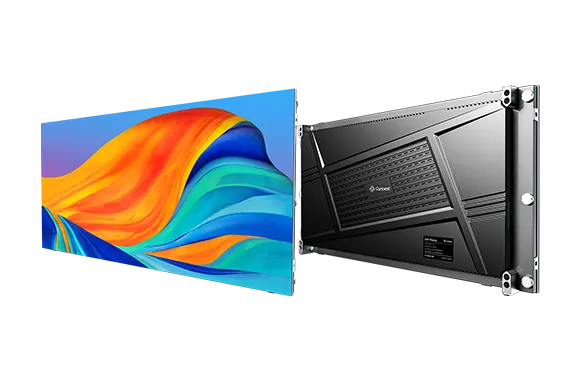 Product image · reference
S Series
640 × 320 mm cabinets, P1.25–P1.86, front service.
Configure →